The short answer: choose stock for speed, OEM for brand fit, ODM for differentiation
Importers do not always need the same sourcing route. A current wholesale model is useful when the buyer wants to test a real product quickly. OEM is the next step when the buyer needs logo, packaging, manual language or carton labeling around an existing product. ODM is for deeper structural or functional development when the available model range cannot support the brand concept.
This page keeps the existing URL because the buyer intent is still MOQ, lead time and packaging. The content now separates stock wholesale, OEM branding and ODM development so buyers can brief HUANTIVE with a more precise RFQ.
Choose in-stock wholesale when you need an existing model
A stock-oriented order starts from a real product page and asks whether the selected model, color and package route are currently available. It can be suitable for distributors, e-commerce sellers or retail buyers who want to evaluate market response before investing in deeper customization.
Stock should not be confused with guaranteed immediate shipment. Buyers should request current availability, standard package, sample route, carton data and destination documents by exact model.
- Best for first sample testing and small channel validation
- Requires current availability confirmation
- Uses existing model specifications and standard packaging unless otherwise agreed
- Still needs documentation review by destination market
Choose OEM when you need branding or packaging changes
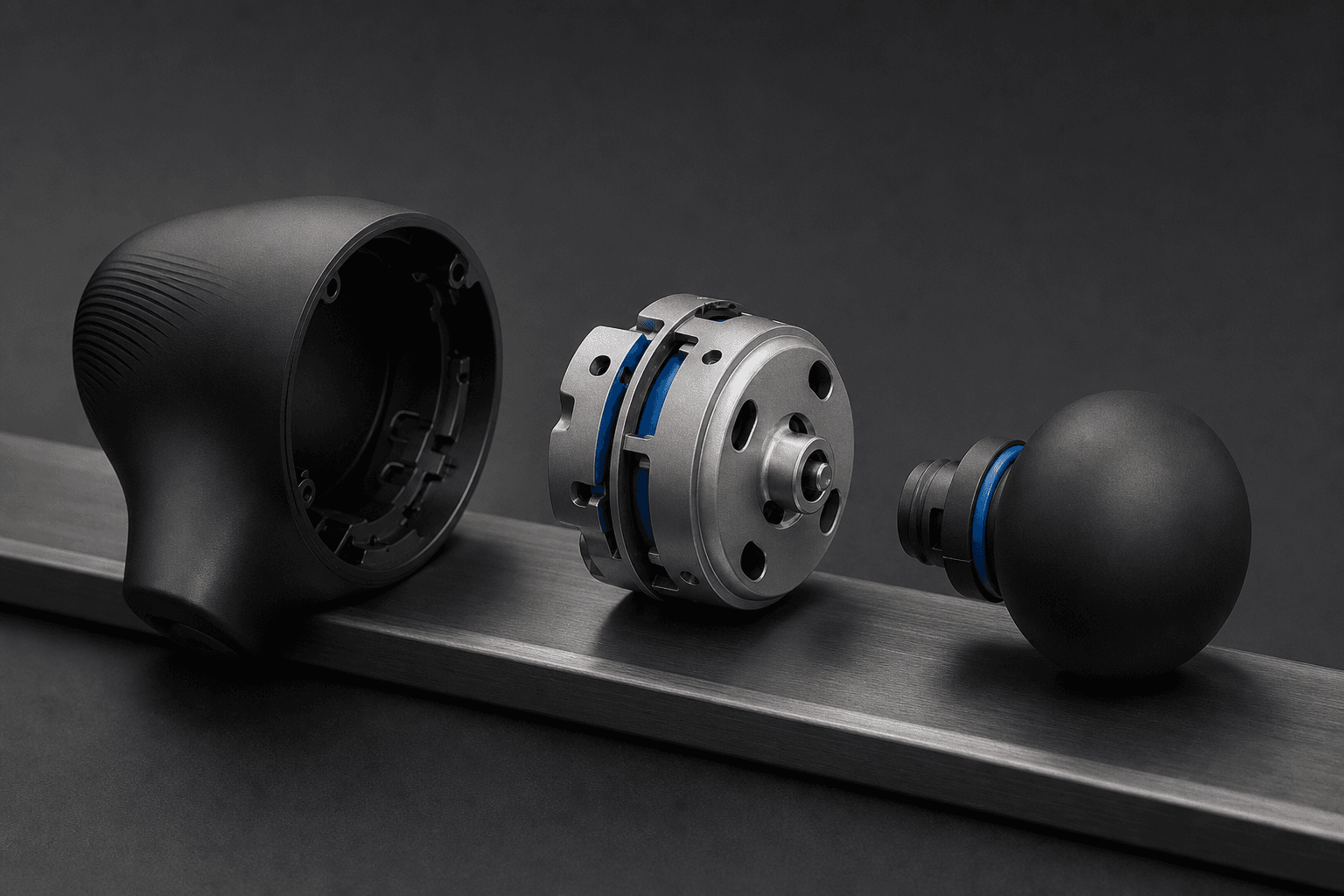
OEM usually keeps the core product platform unchanged while adapting visible commercial elements: logo, retail box, manual language, color, accessory bundle or carton marks. This route is common for massage guns, neck massagers, eye massagers and cushions because buyers can start from a working model and make it fit their brand presentation.
For HUANTIVE quotation discussions, custom logo, manual or packaging starts from 1,000 pcs per item, while a custom color starts from 2,000 pcs per item. These are starting points for discussion, not a universal promise for every model or every configuration.
When ODM development is worth the extra time
ODM is appropriate when the buyer needs a changed structure, new control logic, a different wearable format, a special attachment or a product concept not covered by the current range. It may create stronger differentiation, but it also requires clearer specifications, engineering review, sample iterations, tooling discussion and higher order commitment.
If the buyer cannot explain the commercial reason for the difference, OEM is usually safer for the first program. ODM should be driven by target channel, price tier, user experience and compliance needs rather than by a desire to make a product look different.
Compare stock MOQ, OEM MOQ and customization scope separately
| Route | Best use case | MOQ and lead-time questions | Buyer should provide |
|---|---|---|---|
| In-stock wholesale | Evaluate an existing HUANTIVE model before launch | Current availability, standard MOQ, sample readiness, current carton data | Model number, quantity, destination market and channel |
| OEM | Add logo, packaging, manual, color or accessory changes | Logo/manual/packaging MOQ, custom-color MOQ, sample route, artwork deadline | Brand scope, artwork status, target market, estimated first order |
| ODM | Develop a modified or differentiated concept | Development commitment, tooling, sample rounds, testing, production schedule | Functional brief, target user, market documents and commercial reason |
Samples, quality checks and model-specific documents
A useful sample review checks more than whether the product turns on. Buyers should evaluate product feel, heat or vibration controls, noise impression, grip, charging, accessory fit, packaging, manual wording, safety labels and claim scope. Any problem found at sample stage is cheaper than a launch-stage return issue.
Documentation must be confirmed by exact model, certificate holder, standard, issue date and destination market. Buyers should not assume a document for one configuration covers another product with a different battery, adapter, heat function or wireless module.
How to plan reorders after the first stock purchase
A first wholesale order should create data for the next purchasing decision: which model sold through, which support questions appeared, whether packaging protected the product, which claim wording caused confusion and whether the target market needs a different configuration.
Before the reorder, buyers can decide whether to keep stock packaging, move to OEM branding, add manual languages, request custom colors or build an ODM roadmap. That sequence reduces risk because product decisions are based on real channel feedback.
Frequently asked questions
Is in-stock wholesale the same as immediate shipment?
No. Buyers should ask for current availability by model, color, quantity and packaging route before planning a shipment date.
When should a buyer move from stock to OEM?
Move to OEM when the existing model fits the channel but the brand needs logo, retail box, manual language, color or accessory changes for a repeatable program.
Can HUANTIVE confirm MOQ before the model is selected?
Only general terms can be discussed first. Final MOQ, sample route and lead time should be confirmed by exact model, customization scope and destination market.
Sources
- Google Search Central — helpful, reliable, people-first content — Accessed 2026-11-02
This article is general information, not medical advice. A therapeutic massager is intended to relieve minor muscle aches and pains; it does not diagnose, treat, cure or prevent any disease. Consult a qualified healthcare professional about your individual circumstances.