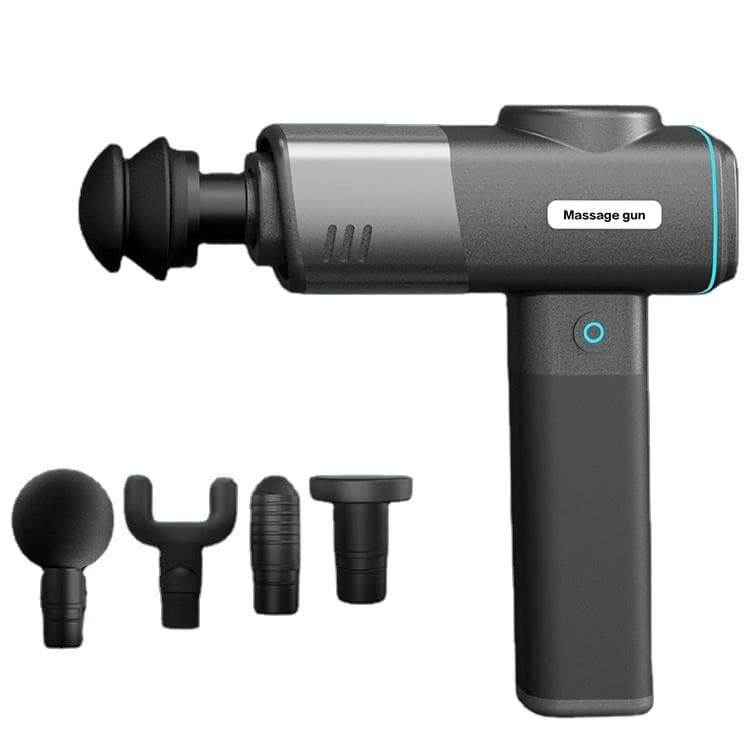
Do not approve a massage gun from catalogue specifications alone
Noise and battery performance can strongly affect reviews, returns and repeat orders. A product can look attractive in photos but still disappoint buyers if it sounds harsh, vibrates uncomfortably, overheats during repeated use or cannot support the expected runtime.
This article explains how importers and private-label buyers can evaluate samples in a repeatable way. It does not publish unverified lab results; instead, it gives a practical method for recording real findings during sample approval.
A practical sample evaluation method
| Area | How to check | What to record |
|---|---|---|
| Noise | Run each speed in the same room and distance | Sound impression and measured dB if buyer has a meter |
| Battery | Fully charge, run repeat sessions by speed | Runtime by mode and charging time |
| Heat | Check handle and motor area after repeated sessions | Comfort, warning signs and shutdown behavior |
| Vibration feel | Use the same attachment and body area | Grip comfort, harshness and control stability |
| Charging | Check cable, port, adapter route and market fit | Charging time and accessory list |
| Consistency | Repeat on more than one sample if available | Variation between units |
How HUANTIVE can support a more evidence-based sample review
HUANTIVE should not be evaluated by a catalogue claim alone. The practical advantage is that buyers can request model-specific sample details for the exact massage gun under review, then compare the sample against a written approval record covering speed setting, battery route, attachment set, packaging, manual language and quality checkpoints.
For HT-HN026 Deep Tissue Massage Gun buyers, the existing product page already publishes buyer-relevant details such as 1300-3200 RPM, 2500mAh battery and eight heads. For mini and hot-cold models, HUANTIVE can help buyers define what should be checked during sample approval: portability, accessory fit, thermal-use wording, charging route, carton data and after-sales expectations. The article should guide buyers to request the actual sample record instead of accepting unsupported performance promises.
How to compare HUANTIVE massage gun platforms
For a full-size wholesale program, compare the HT-HN026 Deep Tissue Massage Gun when the buyer needs stronger perceived performance, multiple heads and a more complete retail set. For a compact program, compare the Mini Massage Gun when the selling point is portability, gifting and lower freight exposure. For feature differentiation, evaluate the Hot and Cold Massage Gun carefully so thermal wording, instructions and packaging stay clear.
Questions to ask the supplier before production
- What battery capacity and charging route apply to the exact model?
- Are runtime statements based on a defined speed and load condition?
- Can the supplier explain expected noise behavior by speed setting?
- What QC checks are performed before shipment?
- Can model-specific manuals, labels and packaging files be reviewed before bulk order?
Frequently asked questions
Can HUANTIVE provide real test results in the article?
This article does not invent measurements. Buyers should request model-specific sample records and confirm noise and battery behavior during their own approval process.
Which massage gun should be tested first?
Start with the model that fits the target channel: compact models for gifting and travel, full-size models for stronger recovery positioning, and hot/cold models for differentiated feature programs.
Why does noise matter for wholesale buyers?
Noise affects user reviews, perceived quality and return risk, especially for home, office and wellness retail channels.
Sources
- Google Search Central — helpful, reliable, people-first content — Accessed 2026-10-20
This article is general information, not medical advice. A therapeutic massager is intended to relieve minor muscle aches and pains; it does not diagnose, treat, cure or prevent any disease. Consult a qualified healthcare professional about your individual circumstances.