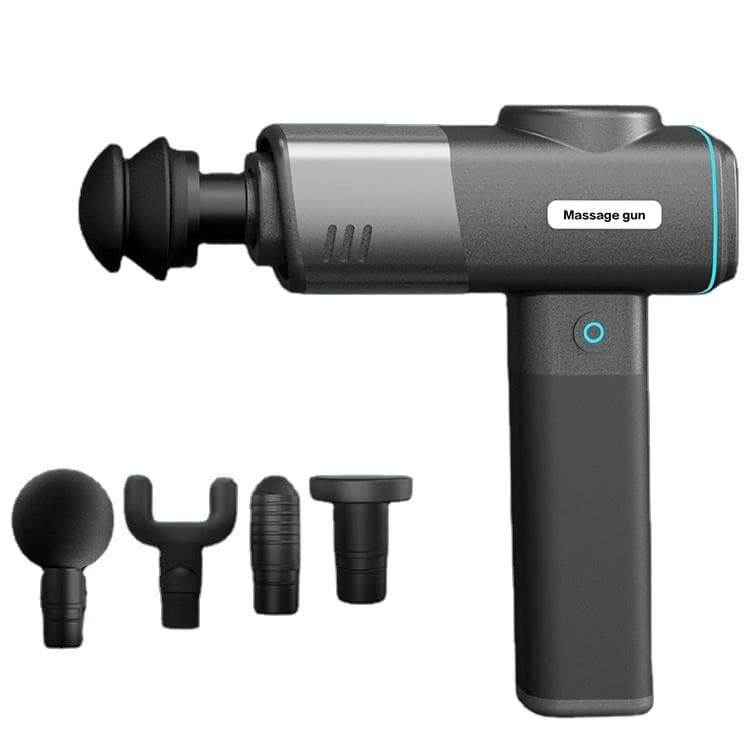
Start with the product role in your range
A private-label massage gun program should start with a commercial decision, not a catalogue screenshot. Buyers need to decide whether the product will be an entry-level mini massage gun, a premium hot-cold model, a sports recovery platform or a bundle with a case and attachments. The right manufacturer should help you match the format to your channel and target price.
This matters because massage guns are a crowded category. If the model, packaging and claims look the same as every other listing, price becomes the only differentiator. A stronger sourcing process uses product configuration, accessory set, packaging and documentation to build visible value before bulk production.
Compare real specifications, not only wattage claims
Private-label buyers should compare motor feel, speed logic, battery experience, noise, grip comfort, attachment quality and charging method. If a supplier cannot explain which values are verified by model, the quotation may not be reliable enough for a serious retail or distributor program.
Ask for product size, package size, carton quantity, carton weight, charging time and runtime where available. These details affect landing cost, user satisfaction and the accuracy of retail listings. For example, HT-HN049 Mini Massage Gun lists a 2000 mAh battery, 5V 2A output, 30W rated power and 12 pcs per carton, while HT-HN026 Deep Tissue Massage Gun lists a 2500 mAh battery, 1300-3200 RPM range, eight heads and 10 pcs per carton.
Evaluate OEM scope before asking for the final price
Private-label sourcing is not just logo printing. Depending on the selected model and order volume, OEM scope may include color, printed logo, retail box artwork, user manual language, attachment set, carry case and market configuration. HUANTIVE uses separate commercial thresholds in quotation discussions: 1,000 pcs per item for custom logo, manual or packaging, and 2,000 pcs per item for a custom color.
Before negotiating the final price, buyers should define what must be customized and what can remain standard. A clear scope lets the manufacturer quote accurately and prevents delays after sample approval. For massage gun programs, buyers can compare HT-HN049 Mini Massage Gun, HT-HN026 Deep Tissue Massage Gun and Hot and Cold Massage Gun routes before deciding whether the first order needs only logo and packaging or a deeper configuration change.
Check sample quality like a customer would
A sample should be tested by multiple users, not only inspected on a desk. Check whether the massage gun feels balanced, whether the handle is comfortable, whether buttons are intuitive, whether attachments fit securely and whether noise level matches your price position.
For hot-cold or thermal-feature models, review the instructions and marketing language carefully. Temperature-related benefits should be presented as comfort and recovery-routine support unless stronger claims are properly documented for the destination market.
Review compliance and claim boundaries
Compliance should be confirmed by exact model, certificate holder, standard, issue date and destination market. Buyers should not assume that one test report applies to every configuration. If the product includes wireless functions, chargers, batteries or heated attachments, documentation scope becomes even more important.
Marketing claims are also part of risk control. Avoid unsupported medical promises and focus on practical language around muscle comfort, daily recovery routines and relaxation. The manufacturer can provide documents, but the brand placing the product on the market remains responsible for the final claims.
Compare MOQ, lead time and payment terms in context
A low unit price is not useful if MOQ is unrealistic, sample lead time is slow or packaging changes cannot be delivered on schedule. Compare quotation terms together: MOQ, sample cost, sample lead time, bulk production lead time, payment terms, warranty scope and packaging options.
For a first order, private-label buyers should prioritize repeatability and launch confidence over the lowest possible unit price. A reliable massage gun manufacturer should help you understand which configuration is realistic for your order volume and launch timeline.
Manufacturer comparison checklist
| Area | What to ask | Why it matters |
|---|---|---|
| Product fit | Which model fits our channel and price? | Prevents generic catalogue sourcing |
| Specifications | Which values are verified by model? | Supports accurate listings and RFQs |
| OEM scope | What can be customized at our MOQ? | Controls cost and lead time |
| Sample testing | How should samples be approved? | Reduces return and review risk |
| Compliance | Which documents apply to this exact model? | Protects the launch market |
| Packaging | What retail box and carton options exist? | Affects shelf appeal and landed cost |
Frequently asked questions
What should I ask a massage gun manufacturer before private labeling?
Ask about model specifications, customization scope, MOQ, sample cost, lead time, packaging options, available documents and warranty terms.
Can massage guns be customized for private-label brands?
Yes. Depending on model and quantity, customization may include logo, color, packaging, manual language, carry case and attachment configuration.
How do I compare massage gun samples?
Test power feel, noise, grip comfort, attachment fit, button logic, heat or cold function if available, packaging quality and user instructions.
Is the lowest unit price the best choice?
Not always. Buyers should compare unit price together with MOQ, lead time, packaging cost, documentation, sample quality and repeat-order stability.
Sources
- Google Search Central — helpful, reliable, people-first content — Accessed 2026-10-16
This article is general information, not medical advice. A therapeutic massager is intended to relieve minor muscle aches and pains; it does not diagnose, treat, cure or prevent any disease. Consult a qualified healthcare professional about your individual circumstances.